LCBS5003 LEADERSHIP AND CULTURE CONTEXTS IN ORGANISATIONAL BASED ASSIGNMENT QUESTION

MODULE OUTLINE

1.   The teaching team
Peter Stokes (PhD, MBA, PGCertRDS, PGCertTLHE, Cert Org Coaching, BA(Hons) Vice-President/Country Director – EMRBI; UK Ambassador – AGRH
Snr FEMRBI, FHEA, FRSA, FCMI
Professor of Leadership and Professional Development in the Leicester Castle Business School, De Montfort University (Leicester, UK). Previously he was Deputy Dean (2012-2015), Acting Executive Dean (2012-2014) and Director of Research and Knowledge Transfer (2014-2015) at the University of Chester (UK). He has taught, researched, published and reviewed extensively in leading journals in the areas of, among others: Management Learning and Development, Human Resource Management and Business Ethics, Values and Character. His work regularly appears in world-class journals. He has held visiting professor/advisor roles in businesses and university management schools in: France, Holland, Spain, Ireland, Germany, Senegal (West Africa), Vietnam, Morocco, Hong Kong, China, India and Dubai. He is fluent in French and Spanish and has a working knowledge of Swedish.
He has also applied his work through national and international knowledge transfer and consultancy projects across a range of business sectors encompassing utilities, construction, publishing, aerospace, diplomatic, emergency services and local government. He currently holds positions on major international bodies including: Vice-President-Business Relations and UK Country Director for the EuroMed Research Business Institute (EMBRI); and, UK Ambassador for the Association Francophone de Gestion des Ressources Humaines (French Academic HR Association). Professor Stokes is a Co-Investigator on the Beliefs, Values and Worldviews at Work project.
Should you require an appointment with Professor Stokes please email peter.stokes@dmu.ac.uk or call 07966 321427.

Get the best Management Assignment Help and writing services from AssignmentTask.com in Australia, UK and USA. Gets a Professional Custom Assignment writing from the best specialists of this subject in Australia?

2.   Module aims
This module introduces students to the principal issues facing organizations in the twenty first century in respect of leading, managing and developing talent .  It aims to develop the critical people management skills and knowledge considered to be necssary for existing and aspiting managers to nurture talent effectively. Attention is paid to key features of the internal and external operating environments which shape leadership practice and talent management strategies in organizations.
Objectives and Learning Outcomes
By the end of this module students will be able to:

  1. To identify and critically assess the practice of  leadership in organizations.
  2. To analyse the influence of organizational culture and  national cultures on leadership practice.
  3. To develop an awareness of the challenges and characteristics of international and cross cultural leadership.
  4. To recognise the practical application of theories of motivation and employee engagement within the leadership role.
  5. To assess the role of the leader in the execution of talent management strategies.
Introduced, Practiced, Assessed
Written communication Introduced, Practiced, Assessed
Interpersonal communication Introduced, Practiced, Assessed
Planning and organisation Introduced, Practiced, Assessed
Oral presentation Discussed and Considered
Teamworking Discussed and Considered
Adaptability Discussed and Considered
Problem solving Introduced, Practiced, Assessed
Numeracy Discussed and Considered
Computer skills Discussed and Considered

3.   How it’s going to be taught
Lectures will be used to introduce topics and to guide reading so that students acquire the necessary factual knowledge to underpin their choice and strategic decision-making in relation to research.
Workshops will be used to simulate research decision-making in the real world and to heighten sensitivity to the ethical, legal and social constraints surrounding research activity.
Guest presenters and speakers will contribute and lead some of the sessions. These are people with extensive and in-depth business management and organization experience in a wide range of situations, sectors and contexts.
4.   How this module relates to your programme of study
This module builds on learning you will have already have undertaken in relation to human behaviour in organizations. It will also develop your knowledge further regarding how to understand and connect with varying cultures and national contexts. This enhanced understanding will be valuable in considering a wide range of organizational domains, functions and activities.
5.   How this module enhances your employability
The knowledge, skills and insights provided by this module will enable you to develop a heightened awareness and sensibility regarding how leadership, human behaviour and team behaviour operate in varying organizations. This will enhance your employability by making you a more holistically aware candidate and employee.
DMU has great ambitions for its students and alumni and we want you to have opportunities that match your ambitions. We offer a wide range of work experiences and now we want to make these even better.
#DMUworks is our fresh new programme to fit around what students, alumni and employers need, focusing on work experience opportunities that may be short, long, based in the UK or abroad – with options to suit different circumstances and aspirations. You can find out and sign up for #DMUworks opportunities on MyGateway.
You can also find out further information about our projects by visiting the following webpage: https://www.dmu.ac.uk/dmu-students/careers-and-employability/careers-and-employability.aspx
6.   Your responsibility
Students are expected to attend and participate in all timetabled activities, including lectures, seminars, workshops, and practical sessions.  Students are also encouraged to fully participate in the academic and cultural life of the Faculty and University, including guest lectures, seminars, public debates and external visits.
As students, your responsibilities are:
Preparation: Complete the required readings before coming to each timetabled session on this module and to undertake the required follow-up work.
Participation: Participation in class is based on participation in class lecture/seminar, as well as group activities in class. To assist your engagement in class you should come prepared by writing down ideas, quotes, or concepts from the reading list that you find interesting as well as thought provoking.  You should come prepared so that you can fully engage in class discussions and activities.
Respect: Throughout your studies it is important that you treat other students with respect as well as engaging in a respectful manner with academic staff. It is imperative that you listen to others and treat their contributions with respect, even if you disagree with them.  In particular it is important that:

  • You are respectful of your peers’ learning and resist talking through seminars, workshops and lectures.
  • You do not answer your phone unless it is an emergency.
  • If you are late, then please take the first available seat and settle yourself as quietly as possible.

The student charter sets out commitments from the university to students, from students to the university, and from the Students’ Union to students. You can consult it at:
http://www.dmu.ac.uk/dmu-students/student-resources/student-charter/student-charter.aspx
The module teaching and assessment team will contribute to this environment by:

  • Treating all students with respect.
  • Welcoming diverse viewpoints, experiences, and interpretations of the class materials.
  • Challenging your thinking, beliefs, and analysis of issues, concepts, and ideas in this class.

8.   Seminar/Workshop Schedule
The seminar/workshop schedule activity is embedded in the above lecture schedule.
9.   Module Resource
TBC
10.   Blackboard and module communications 
Important information relating to this module can be found on Blackboard. This includes information on the module, lecture and seminar materials, all communications and announcements, as well as the procedure for submitting assignments via TurnitinUK.
You can access Blackboard by going to this link: https://vle.dmu.ac.uk
Login using the same username and password that you have for access to the University’s computer services.
Further information on Blackboard can be accessed from the Centre for Enhancing Learning through Technology (CELT): http://celt.our.dmu.ac.uk/blackboard/
If you have any difficulties logging into any computer on campus, then you should contact the Help Desk located on the 1st floor of the Kimberlin Library. In addition, you might contact the ITMS helpline ( +44 (0)116 250 6050) or send an email to itmsservicedesk@dmu.ac.uk noting your name and degree programme).
11.   Assessment Briefs

Type of Assessment: Coursework 1    Learning Outcome: 1,2,3,4,5, Final Assessment Y/N:Weighting: 100%         Threshold: 50%           Essential: Yes  Duration:         Volume: 3,500 (+/- 10%)
Description: Essay.

Assignment Question:
What is leadership and how, and when, might it be necessary and important to modify given leadership styles in relation to changing organizational and national contexts?
Assignment Criteria
A successful assignment will:

  1. Define and explore the notion and nature of leadership;
  2. Consider and explore leadership styles in relation to ethics, values, beliefs and character across a range of contexts and situations;
  3. Introduce, analyse and contextualise a range of relevant leadership theories in relation to the assignment discussion;
  4. Introduce, explain and apply a range of practical examples with which to illustrate the assignment;
  5. Provide an Introduction and Conclusion which are succinct and probing within the assignment response.
  6. Use correctly formatted Harvard referencing for all sources.

Assignment Notes
 
The use of a limited number of sub-titles is recommended for the layout of your assignment. By way of sub-headings it is better to develop and sub-headings which comment and inform the argument development.
 
The assignment should be submitted electronically through the Turnitin system. The cover page for the assignment should include a word count.
Assignment hand in for Cohort 1/Semester 1 delivery – 21st December 2018
Assignment hand in for Cohort 2/Semester 2 delivery – 14th June 2019
12.   Our engagement with you
The feedback that we receive from you is vital to the student experience. We gather this feedback through module and course surveys as well as via meetings and engagement with student representatives. Module and programme teams reflect on the comments that students provide and take action accordingly.
 13.   Guidelines for Ethical Research
Remember that whenever you are conducting research or writing an assignment it is important to observe relevant ethical guidelines and behaviours.
 

Further Information

Attendance: Attendance and engagement in all learning activities is expected in all Faculty of Business and Law modules. For absences due to illness, lasting up to six consecutive calendar days, students must inform tutors, whose classes they are missing, of the reasons for their absence. For absences of seven consecutive days or more due to illness a medical certificate must be submitted to the Faculty Student Advice Centre. Students who wish the illness to be taken into account in relation to an assessment of work must follow the procedures relating to deferral.
Extensions: Extensions to relevant deadlines are only granted where there is a satisfactory explanation provided in advance. Module leaders may be able to grant a short extension of up to 14 days or they can, if appropriate or practical, make alternative arrangements for the assessment. Remember it may not always be possible to make alternative arrangements. In exceptional circumstances extensions beyond 14 days can be granted by the Associate Dean Academic or their nominee.
You may apply for an extension by completing an extension request form available from the Student Advice Centre.
 
Unauthorised late submission of assessments
If an assessment is submitted later than the deadline without an approved extension or deferral the mark received will be capped. If an assessment is submitted 1-14 calendar days late the mark for the work will be capped at the pass mark of 50 per cent for postgraduate modules. If an assessment is submitted beyond 14 calendar days late the work will receive a mark of zero per cent.
 
Deferrals
If your circumstances are such that an extension of 14 days would not be sufficient, or if you feel that, despite being granted an extension of up to 14 days, your performance in a piece of coursework has been seriously impaired, you may apply formally to your faculty panel for a deferral of assessment of coursework. You will have to fill in the appropriate form that is obtainable from the Faculty Student Advice Centre and supply supporting evidence.  Forms should be submitted to the Faculty Student Advice Centre. Further information on the deferrals policy can be consulted at: http://dmu.ac.uk/dmu-students/the-student-gateway/academic-support-office/deferral-of-assessments.aspx
Style and Referencing: Students in the Faculty of Business and Law follow specific referencing guides for all written work.  There are separate guidelines for Law students (https://libguides.library.dmu.ac.uk/law/referencing) and for students in the Leicester Castle Business School (https://libguides.library.dmu.ac.uk/business/referencing).
Law students follow the footnote referencing system: https://libguides.library.dmu.ac.uk/ld.php?content_id=26780459
Leicester Castle Business School students follow the Harvard referencing system:
http://www.library.dmu.ac.uk/Images/Selfstudy/Harvard.pdf
Return of submitted work: All students will be informed via a Blackboard announcement when their assessment is marked. You are strongly encouraged to discuss your written or in some cases audio feedback with your module leader if you have any questions or concerns. Modules assessed wholly or in part by examination may have generic feedback on examination performance made available via Blackboard.
All marks on assessed work are provisional marks only and they will not be confirmed until the Assessment Board meets. Marks and feedback on assessed work will be available within 20 days. The turnaround time does not include weekends, bank holidays or university closure days
The full Assessment and Feedback policy can be consulted at:
http://www.dmu.ac.uk/about-dmu/quality-management-and-policy/academic-quality/learning-teaching-assessment/assessment-feedback-policy.aspx
Good academic conduct and discipline: All students are expected to adhere to the University’s regulations in relation to expected standards of behaviour.
Information on student regulations can be viewed at:
http://www.dmu.ac.uk/dmu-students/the-student-gateway/academic-support-office/student-regulations.aspx
 
Plagiarism and bad academic practice
De Montfort University’s Academic Regulations describe plagiarism as:
“the significant use of other people’s work and the submission of it as though it were one’s own in assessed coursework (such as dissertations, essays, experiments etc)”.
 
This includes:

  • Copying from another student’s work
  • Copying text from sources such as books or journals without acknowledgement
  • Downloading information and/or text from the Internet and using it without acknowledgement
  • Submitting work which you claim to be your own when it has been produced by a group
  • Submitting group work without acknowledging all contributors.

De Montfort University describes bad academic practice as:
Low level duplication without citation for example errors made through carelessness or misunderstanding or
Passing off ideas, data or other information as if originally discovered by the student.
Information on academic offences can be found at:
http://www.dmu.ac.uk/dmu-students/the-student-gateway/academic-support-office/academic-offences.aspx
Further advice on academic offences can be obtained by emailing acasupportoffice@dmu.ac.uk Full details can be found in the University regulations http://www.dmu.ac.uk/dmu-students/the-student-gateway/academic-support-office/student-regulations.aspx
Students are reminded that module assessment results are provisional until ratified by the programme management boards and that results released to students can be revised or redacted if there are concerns regarding academic practices.
Proofreading:
If you do use a third party to proof read your work or a professional proof reading service you must discuss this with your tutor and declare this in a written statement accompanying your work when you submit it for assessment.
Faculty of Business and Law Grade Descriptors
This is a guide to the criteria used by staff in the Faculty of Business and Law assigning a mark to a piece of postgraduate work.  The final mark awarded to a piece of work will be informed by its predominant correspondence to these descriptors.  The University generic descriptors as well as advice for students can be accessed at:
http://www.dmu.ac.uk/about-dmu/quality-management-and-policy/academic-quality/learning-teaching-assessment/mark-descriptors.aspx
Modules are marked on a range of 0-100%.  Mark descriptors are given in the table below.  A mark below 50% indicates a Fail grade (the shaded boxes).

Mark Range Criteria
90-100%Distinction Demonstrates an exceptional ability and insight, indicating the highest level of technical competence.The work has the potential to influence the forefront of the subject, and may be of publishable/exhibitable quality.
Relevant generic skills are demonstrated at the highest possible standard.
80-89%Distinction Demonstrates an outstanding ability and insight based on authoritative subject knowledge and a very high level of technical competence.The work is considered to be close to the forefront of the subject, and may be close to publishable/exhibitable quality.
Relevant generic skills are demonstrated at a very high level.
70-79%Distinction Demonstrates an authoritative, current subject knowledge and a high level of technical competence.The work is accurate and extensively supported by appropriate evidence.  It may show some originality.  Clear evidence of capacity to reflect critically and deal with ambiguity in the data.
Relevant generic skills are demonstrated at a high level.
60-69%Merit Demonstrates a sound, current subject knowledge.  No significant errors in the application of concepts or appropriate techniques.  May contain some minor flaws.The work is well developed and coherent; may show some originality.  Clear evidence of capacity to reflect critically.
Relevant generic skills are demonstrated at a good level.
50 – 59%Pass Demonstrates satisfactory subject knowledge. Some evident weaknesses; possibly shown by conceptual gaps, or limited use of appropriate techniques.The work is generally sound but tends toward the factual or derivative.  Limited evidence of capacity to reflect critically.
Relevant generic skills are generally at a satisfactory level.
45 -49%Marginal Fail Demonstrates satisfactory subject knowledge to some degree. Some important weaknesses; possibly shown by factual errors, conceptual gaps, or limited use of appropriate techniques.The work is generally sound but tends toward the factual or derivative.  Little evidence of capacity to reflect critically.
Relevant generic skills are generally at a satisfactory level.
40-44% Demonstrates limited core subject knowledge.  Some important weaknesses; possibly shown by factual errors, conceptual gaps, or limited use of appropriate techniques.The work lacks sound development.  Little evidence of capacity to reflect critically.
The quality of the relevant generic skills do not meet the requirements of the task.
30-39% Demonstrates inadequate subject knowledge.The work lacks coherence and evidence of capacity to reflect critically.
The quality of the relevant generic skills do not meet the requirements of the task.
20-29% Demonstrates seriously inadequate knowledge of the subject.The work contains minimal evidence of awareness of relevant issues or theory.
The quality of the relevant generic skills do not meet the requirements of the task.
10-19% The work is almost entirely lacking in evidence of knowledge of the subject.  No evidence of awareness of relevant issues or theory.The quality of the relevant generic skills do not meet the requirements of the task.
0-9% The work presents information that is irrelevant and unconnected to the task.No evident awareness of appropriate principles, theories, evidence and techniques.

How we support you

Sometimes things happen that are beyond your control, for example, illness or personal problems.  If things start to affect your studies, you need to let someone know.  There are processes and people to help you.
Your personal tutor is an important starting point for help.  He or she will be able to advise you about the various University procedures.  Many things can be dealt with by your Programme Leader. Academic matters within the Faculty are led by the Associate Dean Academic in conjunction with Associate Professor Student Experience. The staff in the Student Advice Centre are there to provide support and guidance.
There are in addition a number of sources of help that are listed in the Useful Links and Contacts section below, such as the Student Gateway.
Place an order with us to get a customized paper similar to this or any related topic. NB: The assignment will be done from scratch and it
will be 100% original

 
Looking for a Similar Assignment? Order now and Get 10% Discount! Use Coupon Code "Newclient"

COMPLEXITY LEADERSHIP THEORY: ENABLING PEOPLE AND ORGANIZATIONS FOR ADAPTABILITY

‘‘We’ve got 21st century technology and speed colliding head-on with 20th and 19th century institutions, rules and cultures.’’
–Amory Lovins
In 2010, IBM’s CEO Study reported that the rising rate of complexity associated with increasing volatility, uncertainty and interconnectedness was the biggest challenge facing organizational leaders around the globe. In this environment, the world is operating in fundamentally different ways. As Sam Palmisano, head of IBM at the time described, incre- mental changes are no longer sufficient because ‘‘events, threats and opportunities aren’t just coming at us faster or with less predictability; they are converging and influencing each other to create entirely unique situations.’’ These contexts require adaptability and new ways of leading. Despite this, executives indicated that their organizations were not equipped to deal with complexity, and over half the CEOs doubted their ability to manage it.
Since that time complexity has only increased. If in 2010 we saw economies topple from complexity due to the Global Financial Crisis, in recent years it is as if the very foundations of what we know about management are being pulled out beneath us. Organizations and entire industries are being affected, with increased connectivity allowing everyday people to network and drive large-scale political, social and market disruption. For some, these are exciting times and the opportunities to lead change have never been greater. For others, the lack of clarity and speed at which complexity is increasing feels overwhelming and chaotic. For the latter, there is a growing sense of dismay about what the future holds and the inability to control it.

WHAT IS COMPLEXITY?

Although many are feeling and experiencing complexity in the workplace and in their lives, it is harder for them to describe exactly what it is. Despite the name, the concept of complexity itself is really quite simple: Complexity is about rich interconnectivity. Adding the word ‘‘rich’’ to interconnectivity means that when things interact, they change one another in unexpected and irreversible ways. Complexity scholars like to describe this as the distinction between ‘‘complexity’’ and ‘‘complicated.’’ Complicated systems may have many parts but when the parts interact they do not change each other. For example, a jumbo jet is complicated but mayonnaise is complex. When you add parts to a jumbo jet they make a bigger entity but the original components do not change–—a wheel is still a wheel, a window is a window, and steel always remains steel. When you mix the ingredients in mayonnaise (eggs, oil, lemon), however, the ingredients are fundamentally changed, and you can never get the original elements back. In complexity terms, the system is not decomposable back to its original parts.
Once we understand this, we can see complexity all around us. It occurs when networked interactions allow events to link up and create unexpected outcomes, or emergence. As mentioned earlier, the Global Financial Crisis (GFC) is a complexity emergence event in that a variety of factors linked up in an interconnected system and produced an outcome that was largely unpredictable, other than in the short term, and had far-reaching effects. After it happened there was no going back–—organizations and economies around the world had to operate in the new reality. Moreover, the impact can be long lasting. We are still feeling the effects of the GFC, and it influences decision-making and activities in our current contexts.

The ‘‘Order’’ Response

In this new reality, it is more essential than ever for organiza- tions to adapt–—to pivot in real time with the changing needs of the environment. They must fit the mantra of complexity theorists that it takes complexity to beat complexity. Despite this, what we see in our data over and over again is that when faced with complexity, the natural proclivity of people and organizations is to respond with order–—to turn to hierarch- ical approaches of leading and managing change top-down. Snapping back to previously successful, ordered solutions provides a sense of control that satisfies not only the needs of managers who have been trained in traditional leadership models, but also organizational members who look to leaders to take care of them and make things ‘‘right’’ again.
What we see in our research is that when confronted with complexity, organizations most often seek greater account- ability. They demand ‘‘more from less’’ and instill better risk mitigation strategies. When these fail, they turn to greater regulatory control. These ‘‘order’’ responses can actually do more harm than good. An example is the recording industry’s response to the emergence of Napster in the 1990s. From June 1999 to February 2001, the peer-to-peer music sharing entity grew from zero to over 26 million users. For the first time ever, individuals were able to gain access to their favorite songs without having to purchase entire CDs. But the Recording Industry Association of America (RIAA) responded by filing a suit for vicarious copyright infringement under the U.S. Digital Millennium Copyright Act. The result was that in July 2001, Napster was forced to shut down.

The Adaptive Response

In complex environments, instead of order we need an adaptive response. Adaptive responses resist the pull to order and capitalize on the collective intelligence of groups and networks. Organizations that enable an adaptive response do not turn to a top-down approach. Instead they engage net- works and emergence.
Emergence is the creation of new order that happens when agents (e.g., people, technology, information, resources) in a networked system combine together in an environment poised for change to generate the emergence of something that did not exist previously. In the emergence process, interacting parts of a system (i.e., agents) network around some kind of need and begin to link up. Adaptive responses are generated when these networked agents are able to resonate around a new approach, alternative way of thinking, or adaptive solution that meets the needs of a complex challenge. These innovations are generated in the ‘‘space between,’’ meaning that no one person can claim or take credit for them. Rather, they are the result of richly connected interactions that allow diverse people, ideas and pressures to collide and combine in ways that generate emergence of novelty.

ORGANIZING FOR ADAPTABILITY

A complex adaptive system is a dynamic system that is able to adapt in and evolve with a changing environment. At a macro level, it is a collection of dynamic networks of interactions, with each network comprised of a collection of many agents acting in parallel, creating rich interconnectivity. Colonies of social insects such as ants and bees that use simple rules and networked interactions to generate highly adaptive behavior are complex adaptive systems. So are neural networks that comprise the functioning of the human brain. In business, complex adaptive systems are seen in the emergence and dynamics of economies and markets.
In the physical and biological sciences, complex adaptive systems are described as having no centralized control and no fixed order. They are self-organizing, continually adapting and changing in relation to environmental conditions. But we know that is not true of organizational systems. Our struc- tures, no matter how flat or circular, do have hierarchy and hierarchical leaders. Their formal organization charts and management systems inhibit the ability of the system to self-organize. Moreover, because they are grounded in bureaucracy, they value rationality, efficiency and stability over adaptability. There is no getting around this. As long as organizations have hierarchy, and nearly all human organizing systems do, they have elements of bureaucracy, and the natural tendency of bureaucracy is to pull the system to order. The question for our research, then, was: How can we lead our organizations to be adaptive in the face of order imposed by hierarchical (bureaucratic) organizing structures? Given that by definition complex adaptive systems are self-organiz- ing, i.e., they do not have hierarchy and are not managed and planned, is it possible to enable organizations to act as complex adaptive systems even though they have hierarch-ical structures?
lace an order with us to get a customized paper similar to this or any related topic. NB: The assignment will be done from scratch and it
will be 100% original

 
Looking for a Similar Assignment? Order now and Get 10% Discount! Use Coupon Code "Newclient"
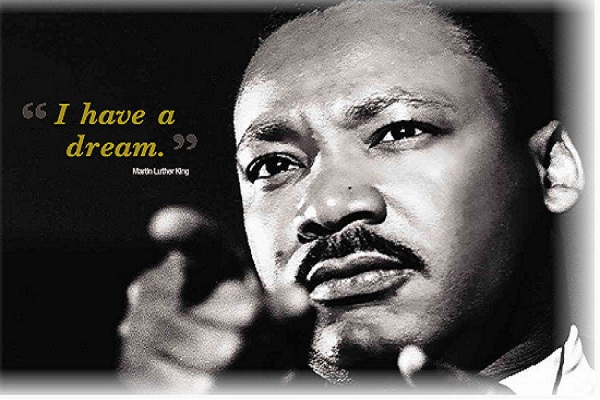
DR. MARTIN LUTHER KING, JR. “I HAVE A DREAM” SPEECH, TRANSFORMATIONAL LEADERSHIP AND VISION

Dr. Martin Luther King, Jr. “I Have A Dream” Speech, Transformational Leadership and Vision. Gets Leadership Assignment writing Help, Homework solution & Essays from PhD/MBA experts. Acquire Writing work with 100% Plagiarism free content – Get Assignment Help online & Research Topics written by native Expert writers.
Abstract. This paper examines Dr Martin Luther King, Jr.’s “I Have a Dream” speech as an effective tool for teaching transformational leadership. Dr King’s speech provides an outstanding example of the transformational leadership process of identifying and articulating a vision. The speech and its historical context may help students to understand the importance of a strategic vision and its effective communication to followers. The paper provides an overview of the historical context of the speech, along with an analysis of speech within the context of the transformational leadership model. Finally, we provide specific suggestions for using the speech as an effective teaching tool.
Dr. Martin Luther King
Keywords: Martin Luther King, Jr., “I Have a Dream” speech, transformational leadership and vision.

1.  Introduction

Effective leadership is a significant need in current organizations due to today’s dynamic environments. While people have examined leadership from a variety of perspectives, the transformational leadership stream of research provides strong evidence of positive links between transformational leaders and organizational outcomes (e.g. Bass 1999; Fuller, Patterson, Hester & Stringer 1996, Judge & Piccolo 2004, Kearney & Geber, 2009, Herold, Fedor, Caldwell, & Liu 2008, Bass, Avolio, Jung, & Berson 2003, Kirkman, Chen, Farh, Chen, & Lowe 2009, Godwin & Neck 1998, Gong, Huang, & Farh 2009, Piccolo & Colquitt 2006). Researchers have examined a variety of dependent variables such as the positive relationships between transformational leadership and follower attitudes such as
Subscribers are granted a licence to make one copy of the paper for personal use only. Apart from this licenced copy, none of the material protected by the copyright notice can be reproduced or used in any form either electronic or mechanical, including photocopying, recording or by any other information recording or retrieval system, without prior written permission from the owner(s) of the copyright. For multiple copy orders and reprint, permissions contact the JOBE Publishing Editor, pneilson@neilsonjournals.com.  All rights reserved. © 2011 NeilsonJournals Publishing
organizational commitment and job satisfaction (Fuller, et al. 1996, Lowe, Krock, & Sivasubrananian 1996). Given the significant support for the efficacy of transformational leadership, the purpose of this paper to examine Dr. Martin Luther King, Jr.’s “I Have a Dream” speech as an effective tool for teaching transformational leadership.

1.  Historical Context

On January 15, 1929 in Atlanta, Georgia, Martin Luther King, Sr. and Alberta Christine Williams welcomed their second child and first son, Martin Luther King, Jr., into their family. With both parents residing and serving as prominent Baptist preachers in the culturally robust city, Martin Jr. was immediately engulfed in the culture of the black community during a time when most blacks were disadvantaged by a racist, white society. Consistent with many other civil right leaders, King developed his moral, spiritual, and leadership values from the African-American’s most influential social body, the church. In addition, the high value he placed on education and self-improvement would shape his leadership style as an advocate for civil liberties for all Americans.
Martin Luther King, Jr.’s family heritage and church greatly influenced him in the early stages of his life. His mother, Alberta, was “not only a strong spiritual force in young Martin’s life, but she was also a source of insight and comfort for him as he struggled to understand slavery and its tragic legacy of racism and segregation” (Baldwin 1992, p. 644). Furthermore, as a pastor of Atlanta’s Ebenezer Baptist Church and a president of the NAACP in the 1930s, Martin Luther King, Sr. introduced him to “the integrationist values of protest, accommodation, self-help, and optimism as they were related to the religious themes of justice, love, obedience, and hope” (Cone 1992, p. 22). Together, Martin’s home and spiritual life complemented each other to reinforce the values that each instilled in him. They would become the driving force of his life.

3.  The Text of the Speech

By Dr. Martin Luther King, Jr., (August 28, 1963)
I am happy to join with you today in what will go down in history as the greatest demonstration for freedom in the history of our nation. Five score years ago, a great American, in whose symbolic shadow we stand signed the Emancipation Proclamation. This momentous decree came as a great beacon light of hope to millions of Negro slaves who had been seared in the flames of withering injustice. It came as a joyous daybreak to end the long night of captivity.
But one hundred years later, we must face the tragic fact that the Negro is still not free. One hundred years later, the life of the Negro is still sadly crippled by the manacles of segregation and the chains of discrimination. One hundred years later, the Negro lives on a lonely island of poverty in the midst of a vast ocean of material prosperity. One hundred years later, the Negro is still languishing in the corners of American society and finds himself an exile in his own land. So we have come here today to dramatize an appalling condition.
In a sense we have come to our nation’s capital to cash a check. When the architects of our republic wrote the magnificent words of the Constitution and the Declaration of Independence, they were signing a promissory note to which every American was to fall heir. This note was a promise that all men would be guaranteed the inalienable rights of life, liberty, and the pursuit of happiness.

4.   Analysis of the “I Have a Dream” Speech as an Applied Example of Transformational Leadership

Despite its general acknowledgement as one of the great public speeches in American history, Dr. King’s speech has been afforded relatively little scrutiny by rhetorical scholars (Vail 2006) and has been paid even less attention as an applied example of transformational leadership. In this section, we provide an analysis of King’s speech as an outstanding illustration of the use of context, urgency, and resonance to create a transformational vision in order to energize and inspire followers to accomplish objectives and achieve goals.
Burn (1978) is credited with the development of the transformational leadership construct. Bass (1985) subsequently built on Burn’s work to more fully develop this leadership perspective and its applications in organizations. This framework of leadership behaviors has four conceptual dimensions: charismatic leadership, inspirational leadership, intellectual stimulation, and individualized consideration (Bass 1985, 1990, Hater & Bass 1990, Seltzer, Numerof, & Bass 1989, Yammarino & Bass 1990). Podsakoff, Mackenzie, Moorman, and Fetter (1990, p. 112) developed the following similar, yet slightly different, formulation of transformational leadership behaviors:

  • Identifying and Articulating a Vision – …developing, articulation, and inspiring others with his or her vision of the
  • Providing an Appropriate Model – …that sets an example for employees to follow that is consistent with the values the leader espouses.
  • Fostering the Acceptance of Group Goals – …promoting cooperation among employees and getting them to work together toward a common
  • High Performance Expectations – …expectations for excellence, quality, and/ or high performance on the part of
  • Providing Individualized Support – …respects followers and is concerned about their personal feelings and
  • Intellectual Stimulation – …challenges followers to re-examine some of their assumptions about their work and rethink how it can be performed.

Podsakoff et al. (1990) provided psychometric support for a four-factor model. The first three (“identifying and articulating a vision”, “providing an appropriate model”, and “fostering the acceptance of group goals”) loaded on one factor, which Podsakoff et al (1990) labeled “core transformational leadership behaviors”. The remaining three components of “high performance expectations”, “providing individualized support”, and “intellectual stimulation” had psychometric evidence justifying separate factors (Podsakoff et al. 1990, p. 117).
The core transformational leadership behaviors contribute to increasing the goal commitment of followers. Articulating a vision conveys “a view of a realistic, credible, attractive future for the organization, a condition that is better in some important ways than what now exists” (Bennis & Nanus 1985, p. 89). An
effective leader communicates the vision clearly such that followers will be attracted to it. If followers understand and “buy-in” to the vision then followers are more likely to be committed to its implementation (Locke, Kirkpatrick, Wheeler, Schneider, Niles, Goldstein, Welsh, & Chah 1991). “Providing an appropriate model” also contributes to communicating the vision. Locke, et al. (1991, p. 59) noted: “By acting in accord with the vision, leaders communicate to followers the importance of the vision and their own commitment to it.” Modeling by a leader of behaviors provides the support for the leader’s verbal articulation of the vision (Locke et al. 1991).

5.  Using Dr. King’s Speech as an Effective Teaching Tool

The analysis of Dr. King’s speech as an applied example of transformational leadership and vision can easily be adapted as an effective classroom teaching tool. We suggest the following detailed outline for a 50-70 minute class time frame:

  1. Core transformational leadership behaviors
    • Identifying and Articulating a Vision
    • Providing an Appropriate Mode
    • Fostering the Acceptance of Group Goals
  2. High Performance Expectations
  3. Providing Individualized Support
  4. Intellectual Stimulation (Podsakoff et al. 1990)
  5. Ask students for examples of transformational leaders. Dr. King will usually be among the first names
  6. Divide the class into groups of 3-5 to facilitate
  7. Using the material presented in the “Historical Context” section above, provide the class with an overview of the events and circumstances surrounding Dr. King’s speech. Reconstructing the dynamic spectacle surrounding the speech can heighten the drama of the discussion in class and will help to illustrate how articulating this vision made a difference in this specific situation. Providing the historical context is especially important if this example is being used in an international culture that may be less familiar with Dr. King and the American Civil Rights Movement. Including details such as the fact that when King and his wife left their hotel room that morning, King thought the March was a failure because

media outlets were reporting that there were only about 25,000 marchers, a ten-fold underestimate, can add to the atmospheric drama. Also explain to the students that when he arrived at the famous “dream” segment of his speech, Dr. King abandoned his prepared script and was speaking quasi- extemporaneously, employing a series of familiar “set pieces” that he had been using in his preaching and political speeches for the past several years. Ask students to watch for when this “shift” takes place and to note any changes in Dr. King’s style of delivery and in the effectiveness of his message and vision. Finally, ask students to try to identify any rhetorical techniques that King may have used to increase the effectiveness of his vision.
8.Show the “I Have a Dream” speech to the

  • Copies are available in many
  • YouTube can also be a source for this

9.Ask the students (in their discussion groups) to answer the following questions:

  • What are the main points of Dr. King’s vision? How does the speech paint a picture of the future that is better that the situation in 1963?
  • Why do you think Dr. King was so effective at communicating this vision?
  • What rhetorical techniques helped him to create his vision? Are these same techniques available to business leaders?
  • What can we learn regarding the communication of a strategic vision in organizations? In what ways is leading change in an organization like leading change in a social movement?

10.Have each group report their answers to these questions and then finish the class exercise with a general                       discussion leading to some summary conclusions. The instructor should use the detailed information presented           in the analysis above to facilitate the class

6.  Conclusion

In short, Dr. Martin Luther King, Jr. and his “I Have a Dream” speech provide an excellent example of transformational leadership and vision (McGuire & Hutchings 2007). We can learn from his skills in developing and communicating an effective strategic vision. Dr. King was effective in leading a movement that would help transformation the nation. Although the transformational nature of the “dream” speech was not immediately realized – the civil rights movement suffered several severe setbacks in the initial years following the March on
Washington – much like Lincoln’s Gettysburg Address, the speech began to acquire a wide reaching and transformational influence following Dr. King’s assassination in 1968. Today, the transformational vision created by the “I Have a Dream” speech forms the cornerstone of Dr. King’s leadership efforts that have been translated into a social influence that continues more than four decades after his death.

References:

Baldwin, Lewis V. (1992), “The Making of Dreamer: The Georgia Roots of Martin Luther King, Jr.” The Georgia Historical Quarterly Vol. 76, No. 3, pp. 639-651. 18 Sept. 2011 <http:// www.jstor.org/stable/40582594>
Bass, B. M., (1985), Leadership and performance beyond expectations. New York: Free Press. Bass, B. M. (1990), Bass & Stogdill’s Handbook of Leadership, Theory, Research, and Managerial Applications. New York: The Free Press.
Bass, B. M. (1999), “Two decades of research and development in transformational leadership”, European Journal of Work and Organizational Psychology, 8: pp. 9-32.
Bass, B. M., Avolio, B. J., Jung, D. I., & Berson, Y. (2003), “Predicting unit performance by assessing transformational and transactional leadership”, Journal of Applied Psychology, 88, pp. 207-218.
Bennis, W. G. & Nanus, B. (1985), Leaders: The Strategies for Taking Charge. New York: Harper & Row.
Bono, J. E., & Judge, T. A. (2003), “Self-concordance at work: toward understanding the motivational effects of transformational leaders”, Academy of Management Journal, 46 (5), pp. 554-571.
Bryman, A., (1992), Charisma and leadership. London: Sage. Burns, J. M. (1978), Leadership. New York: Harper & Row.
Carson, Clayborn (1997), “Martin Luther King Jr.: The Morehouse Years”, The Journal of Blacks in Higher Education No. 15, pp. 156-189. 18 Sept. 2011 <http://www.jstor.org/stable/2962714>
Colbert, A. E., Kristof-Brown, A. L., Bradley, B. H., & Barrick, M. R. (2008), “CEO transformational leadership: The role of goal importance congruence in top management teams”, Academy of Management Journal, 51, pp. 81-96.
Cone, James H. (1992), Martin & Malcom: A Dream or a Nightmare. Maryknoll, NY: Orbis Books.
Conger, J. A. & Kanungo, R. N. (1987), “Toward a behavioral theory of charismatic leadership in organizational settings”, Academy of Management Review 12, 5, pp. 637-647.
Darsey, J. (1997), The Prophetic Tradition and Radical Rhetoric in America. New York: New York University Press.
Fuller, J. B., Patterson, C. E., Hester, K., & Stringer, D. Y. (1996), “A quantitative review of research on charismatic leadership”, Psychological Reports, 78: pp. 271-287.
Godwin, J. L. & Neck, C. P. (1998), “Desired Transformational Leadership Behaviors in a Religious Organization: Analysis by Hierarchical Organizational Level”, International Journal of Organization Theory & Behavior, 1 (2), pp. 163-180.
Goleman, D., Boyatzis, R., & McKee, A. (2002), Primal Leadership: Realizing the Power of Emotional Intelligence. Boston: Harvard Business School Press.
Gong, Y., Huang, J., & Farh, J. (2009), “Employee learning orientation, transformational leadership, and employee creativity: The mediating role of employee creative self-efficacy”, Academy of Management Journal, 52, pp. 765-778.
Hansen, D. D. (2003), The Dream: Martin Luther King, Jr., and the Speech that Inspired a Nation.
New York: Ecco.
Hater, J. J. & Bass, B. M. (1988), “Superiors’ evaluations and subordinates’ perceptions of transformational and transactional leadership”, Journal of Applied Psychology, 73 (4), 695- 702.
Herold, D. M., Fedor, D. B., Caldwell, S., & Liu, Y. (2008), “The effects of transformational and change leadership on employees’ commitment to a change: A multilevel study”, Journal of Applied Psychology, 93, pp. 346-357.
House, R. J. (1977), “A 1976 theory of charismatic leadership”. In J. G. Hunt & L. L. Larson (Eds.), Leadership theory and research: Perspectives and directions (pp. 81-107). San Diego, CA: Academic Press.
Howell, J. M. & Avolio, B. J. (1993), “Transformational leadership, transactional leadership, locus of control, and support for innovation: Key predictors of consolidated-business-unit performance”, Journal of Applied Psychology, 78 (6), pp. 891-902.
Judge, T. A. & Piccolo, R. F. (2004), “Transformational and Transactional Leadership: A meta- analytic test of their relative validity”, Journal of Applied Psychology, 89, pp. 755-768.
Kearney, E. & Gebert, D. (2009), “Managing diversity and enhancing team outcomes: The promise of transformational leadership”, Journal of Applied Psychology, 94, pp. 77-89.
Kirkman, B. L., Chen, G., Farh, J. L., Chen, Z. X., & Lowe, K. B. (2009), “Individual power distance orientation and follower reactions to transformational leaders: a cross-level, cross- cultural examination”, Academy of Management Journal, 52(4), pp. 744-764.
Kirkpatrick, S. A. & Locke, E. A. (1996), “Direct and indirect effects of three core charismatic leadership components on performance and attitudes”, Journal of Applied Psychology, 81 (1), pp. 36-51.
Kouzes. J. M. Posner, B. Z. (1987), The leadership challenge. San Francisco: Jossey-Bass Larwood, L., Falbe, C. M., Kriger, M. P., & Miesing, P. (1995), “Structure and meaning of organizational vision”, Academy of Management Journal, 38(3), pp. 740-769.
Locke, E. A., Kirkpatrick, S., Wheeler, J. K., Schneider, J., Niles, K., Goldstein, H., Welsh, K., & Chah, D. (1991), The Essence of Leadership. New York: Lexington Books.
Locke, E. A. & Latham, G. P. (1990), A theory of goal setting & task performance. Englewood cliffs, NJ: Prentice Hall.
Lowe, K. B., Kroeck, K. G., & Sivasubramaniam, N. (1996), “Effectiveness correlates of transformational and transactional leadership: A meta-analytic review of the MLQ literature”, Leadership Quarterly, 7: pp. 385-425.
McGuire, D. & Hutchings, K. (2007), “Portrait of a transformational leader: The legacy of Dr Martin Luther King Jr.”, Leadership & Organization Development Journal, 28(2), pp. 154- 166.
Miller, K. D. (1989), “Voice merging and self-making: The epistemology of “‘ Have A Dream’”, Rhetoric Society Quarterly, 19, pp. 23-31.
Nanns. B. (1992), Visionary leadership: Creating a compelling sense of direction for your organization. San Francisco: Jossey-Bass Paolillo, J. G. P., Jackson, J. H., & Lorenzi, P. (1986), “Fusing goal integration”, Human Relations, 39, pp. 385-398.
Piccolo, R. F. & Colquitt, J. A. (2006), “Transformational leadership and job behaviors: The mediating role of core job characteristics”, Academy of Management Journal, 49, pp. 327-340. Pillai, R. (1996), “Crisis and the emergence of charismatic leadership in groups”, Journal of Applied Social Psychology, 26, pp543-562.
Podsakoff, P. M., MacKenzie, S. B., & Bommer, W. H. (1996), “Transformational leader behaviors as substitutes for leadership as determinants of employee satisfaction, commitment, trust, and organizational citizenship behaviors”, Journal of Management, 22 (2), pp. 259-298.
Podsakoff, P. M., MacKenzie, S. B., Moorman, R. H., & Fetter, R. (1990), “Transformational leader behaviors and their effects on followers’ trust in leader, satisfaction, and organizational citizenship behaviors”, Leadership Quarterly, 1, pp. 107-142.
Procter, D. E. (1990), “The dynamic spectacle: Transforming experience into social forms of community”, Quarterly Journal of Speech, 76, pp. 117-133.
Roberts, N. C., & Bradley, R. T. (1988), “Transforming leadership: A process of collective action”, Human Relations, 38, pp. 1023-1046.
Seltzer, J. & Bass, B. M. (1990), “Transformational leadership: Beyond initiation and consideration”, Journal of Management, 16 (4), pp. 693-703.
Seltzer, J., Numerof, R. E., & Bass, B. M. (1989), “Transformational leadership: Is it a source of more burnout?”, Journal of Health and Human Resources Administration.
Vail, M. (2006), “The ‘integrative’ rhetoric of Martin Luther King Jr.’s ‘I Have a Dream’ speech”, Rhetoric & Public Affairs, 9 (1), pp. 51-78.
Vancouver, J. B., Millsap, R. E., & Peter, P. A. (1994), “Multilevel analysis of organizational goal congruence”, Journal of Applied Psychology, 79, pp. 666-679.
Vancouver, J. B. & Schmitt, N. W. (1991), “An exploratory examination of person-organization fit: Organizational goal congruence”, Personnel Psychology, 44, pp. 331-351.
Vander Lei, Elizabeth & Keith D. Miller (1999), “Martin Luther King Jr.’s ‘I Have a Dream’ in Context: Ceremonial Protest and African American Jeremiad”, National Council of Teachers of English Vol. 62, No. 1: pp. 83-89. 18 Sept. 2011 http://www.jstor.org/stable378900 Weber, M. (1947), The theory of social and economic organization. (Talcott Parsons, Translated).
New York: Free Press.
Yammarino, F. J. & Bass, B. M. (1990), “Transformational leadership and multiple levels of analysis”, Human Relations, 43 (10): pp. 975-995.
Yukl, G. (1994), Leadership in Organizations (3rd ed.). Englewood Cliffs, NJ: Prentice Hall.

 
Looking for a Similar Assignment? Order now and Get 10% Discount! Use Coupon Code "Newclient"

BSB51918 DIPLOMA OF LEADERSHIP AND MANAGEMENT ASSIGNMENT

Task 1

Assessment Instructions
For this task, you must plan and undertake an audit of the documented frameworks of the WHS management system at a workplace and report on the outcomes to the WHS manager there.

  • Develop a plan and timeline for the WHS systems documentation audit. This must be approved by the facilitator before the process goes further. The facilitator will provide details of the workplace you will be visiting (your college premises) and will have discussed the project with the WHS manger there.
  • Arrange appointment with WHS manager at the workplace and discuss the plan. Be prepared for alterations according to time and availability. Evidence can be in the form of meeting minutes. These should be discussed with the assessor also. Specifically discuss the quality systems framework that the organisation has and the impacts that it has on the WHS system.
  • Develop the audit checklist and check it with the assessor and the workplace WHS manger. Ensure that the checklist clearly evaluates the WHS system in line with the organisation’s quality systems framework.
  • Undertake the audit using the documents provided by the manager and any areas of work that you might visit.
    Analyse the results of the audit, providing summaries for the data in tables where appropriate. Propose actions to address any problems that might become obvious. Ensure that you include hazard identification for each of the stages that will be involved in making these changes to the workplace. Suggest some methods for communicating the findings to the managers and employees as part of the report.
  • Present the audit report to the WHS manager.

To be deemed competent you will need to successfully demonstrate the following:

  • Plan of audit process including time line for completion.
  • Development of audit checklist.
  • Log book of activities including brief minutes of meetings and all development time and actions undertaken.
  • Audit report including data summaries, analysis and proposals for action (including hazard identification) and communication strategies.

Task 2

Assessment Instructions
There is a large amount of WHS data in the workplace which can provide useful information on a variety of areas. As an effective manager you must be able to summarise and analyse a variety of WHS data which has been given to you. You must also be able to identify trends and suggest possible actions to address any issues arising from the data.
Procedure

  • Carefully read through all the WHS data you have been given. Ask the facilitator if anything is not clear.
  • Group and summarise the data using tables and graphs. For example, you might consider calculating and graphs for Lost Time Injury Frequency Rate, Average Time Lost Rate, Medically Treated Injury Frequency Rate etc.
  • Identify trends and patterns within the data.
  • Analyse these patterns and other factors to produce an action plan to deal with any identified WHS issues.
  • Compile a report using the work you have done in steps 2-4.
  • Ask your facilitator for further clarification.

To be deemed competent you will need to successfully demonstrate the following:

  • The report should include tables and graphs.
  • The report should include analysis of the data and suggestion of actions to address issues arising from the data analysis.

Task 3

Assessment Instructions
This is an individual assessment. You are required to answer a series of questions. You must answer all of the questions below, and include examples where appropriate. Please ensure that you have answered each question with an appropriate level of detail. If you need help understanding any questions, ask your assessor to explain.
Procedure

  • Read the questions carefully and provide the most suitable answer in writing in the space provided.
  • Ask the facilitator if any of the questions are unclear.

To be deemed competent you will need to successfully demonstrate the following:

  • Each question must be answered completely.

QUESTION 1: Complete the table below by ticking one column for each document:
QUESTION 2: Resources and Responsibility Case Study
John has noticed an increase in the number of injuries and back discomfort among the warehouse staff after the introduction of a number of new products. He has therefore developed a new policy on manual order picking to address some of the issues.
The policy is noted below:
Policy 234 – Manual Order Picking
All manual order picking tasks will be undertaken safely with appropriate equipment used to maximise employees working in the Best Working Zone – close to the body between the shoulders and knees.
Question 2a: Identify four human and four financial resources that will be required for this policy to operate effectively.
Question 2b: Identify three responsibilities that the different employees and managers will have for the implementation of this policy.
QUESTION 3: Hazard and Risk Control Case Study
Mario has recently started his own plumbing supplies business after many years experience as a contract plumber. He knows the many hazards that face plumbers on the job but now has to think through those associated with his new shop and warehouse. He needs a forklift to move boxes of fittings and piping and some tall racking in the warehouse to provide the storage space for bulk lots. He will need unloading space for trucks as well as parking areas for customers. His shop will need appropriate lighting and shelving and a helpful customer service counter area. He will also need to consider the security of his warehouse and shop at night.
Identify three key hazards, assess their risk using the table on the following page and suggest two control strategies for each of them. Ensure that one of the controls is to be from the lower end of the control hierarchy and one of them is to be from the higher end.
Risk Assessment Table
QUESTION 4: Induction and Training Case Study
Mario has some new staff beginning next week. He needs to ensure that they are ready to start work safely and are able to continue to work safely, building his business over the years to come.
Question 4a: Develop a list of broad headings for six induction activities for Mario’s employees using the format given below.
Question 4b: Note six key areas of training and competency that will be important to support the WHS management system in the company. Ensure that you think through all of the areas of responsibility that his staff will have.
QUESTION 5: Communication Case Study
Mario has realised that WHS management has a lot to do with communication and good relevant ongoing systems. He realises that he needs to plan communication methods that are helpful for his managers as well as his employees.
Develop a list of six communication strategies for Mario’s company using format given below. Indicate which are more appropriate for managers, for employees and which will be useful both by noting this in the right column of the table. Ensure that there is at least one from each of the managers, employees or both categories.

 
Looking for a Similar Assignment? Order now and Get 10% Discount! Use Coupon Code "Newclient"